Webflow in 2025: Everything That's Changed for Professional Low-Code Sites


It's impossible to ignore the leap that the digital universe has experienced since 2020. The rapid pace of change seems to have gained even more momentum in recent years. And in this scenario, low-code platforms, especially Webflow, have gained a foothold. If you're looking to create tailor-made digital experiences, without relying on lines and lines of code, you need to be aware of what has changed in Webflow in 2025.
If you haven't been following this evolution closely, you might find the new features a bit much. But don't worry, you don't have to go out and program desperately or settle for generic websites. Today, building beautiful, fast and functional digital solutions is within the reach of those who know how to combine strategy, design and the best tools, a mission that RMD Soluções Digitais fulfills on a daily basis with growing brands.
Webflow in 2025 has changed the game for low-code website specialists.
The growth of low-code platforms
Before going into the details of Webflow, it's worth understanding why low-code has become so popular. According to a recent projection on the global market for low-code platformsthis segment is expected to reach US$264.4 billion by 2032, with annual growth of 32%. This is because companies of all sizes are under pressure to deliver differentiated digital experiences with agility.
In addition, another market analysis details that digital transformation and automation are driving this advance. Small, medium and large organizations want to launch digital products without slowing down the business. Flexibility, speed and cost reduction are terms that have become the norm for those who want to stand out online.
And it's not just a trend for technology companies. Segments such as education, health and retail are also embracing low-code. A industry report shows that the market has fragmented by type of app, client size and business vertical. In other words, each sector finds its own way of using technology.
More agility to launch sites and systems;
Less dependence on programmers;
Secure and scalable solutions;
Sophisticated design, even for non-front-end developers.
What has changed for Webflow in 2025?
Webflow, one of the protagonists of the low-code movement, underwent a remarkable transformation between 2023 and 2025. What seemed like just a visual builder now brings together advanced customization, integration and performance features.
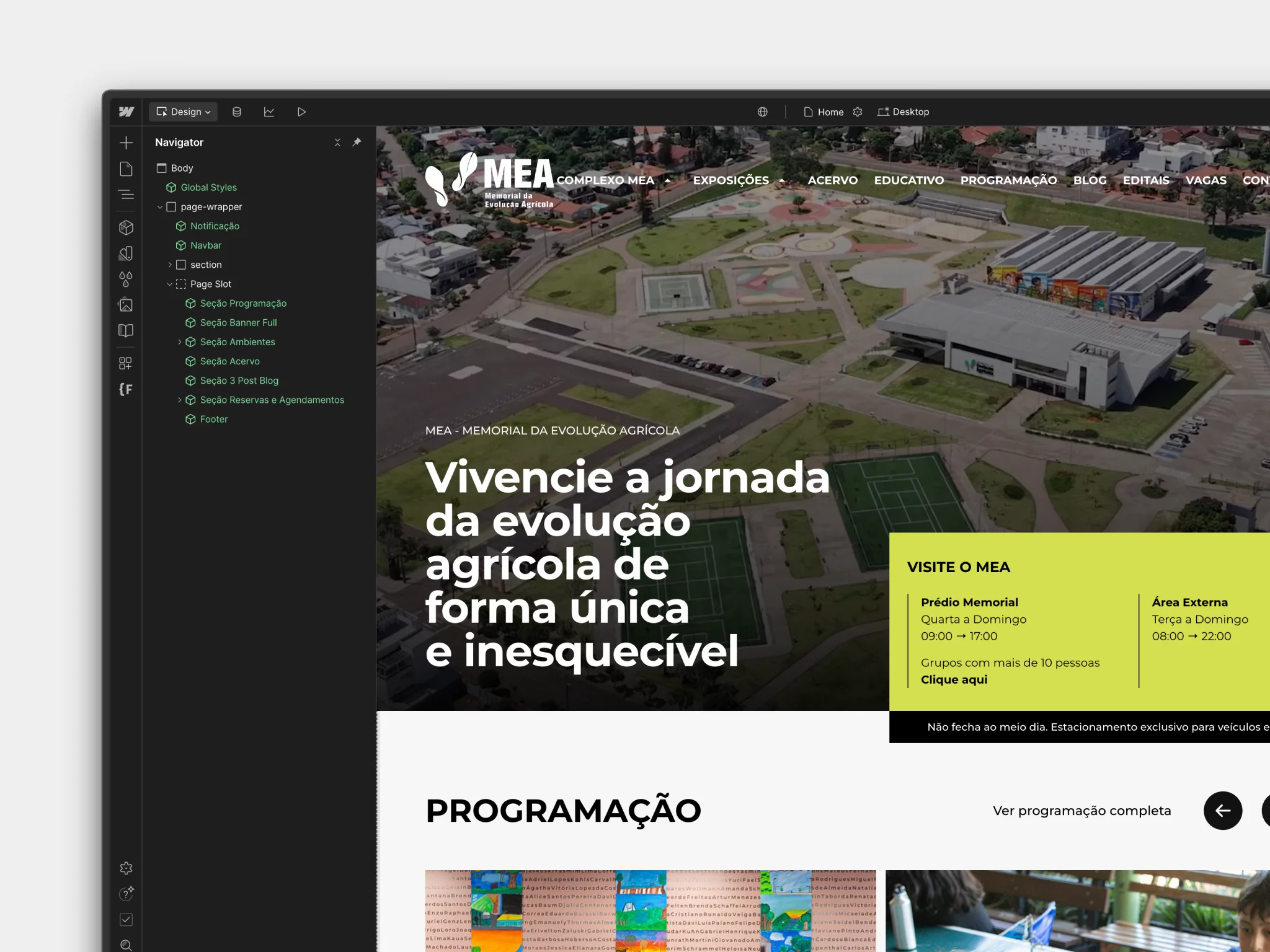
Transformative innovations in Webflow
App Gen: a new feature that allows the creation of customized applications without the need for coding, making it even easier to build digital solutions;
Advanced CMS: a more powerful content management system, with intelligent filtering options and cross-references that maintain performance, even with large volumes of data;
Native Widgets: include tools such as calendars, interactive forms and email automations with ease, optimizing the user experience;
Improved Accessibility and SEO: new compliance standards and automatic suggestions in the editor, ensuring that sites are accessible and well indexed by search engines;
Low-Code/No-Code Integration: ready-made modules that combine visual design with customized logic, allowing unprecedented flexibility for creators.
These innovations have transformed Webflow, which is now a strategic choice not only for designers, but also for teams looking for scalability and process integration. From small stores to large portals, creating complex solutions has become more accessible and efficient on the same platform.
The impact for digital professionals and brands
On a daily basis at RMD, we see companies that were previously hesitant to migrate to Webflow rethinking their plans. Today, there is room for both quick solutions and tailor-made projects, with sophisticated controls and impressive visuals.
Agile, componentized implementation, allowing for greater flexibility in updates;
Institutional sites ready to scale, with a blog and plug-and-play integrations;
Webflow in 2025 has become synonymous with autonomy for digital teams.
Designers and marketing managers often don't want to depend on IT for small changes. The new panel allows adjustments to be made in seconds, reducing bottlenecks and speeding up routines.
New routines for professional creation
With the new features, those who work with low-code websites need to rethink their processes. It's not enough to drag blocks and publish. Taking care of UX, accessibility and integrations has become even more important. That's why following insights from the RMDblog, it's easy to see: the difference lies in combining strategy with creativity and adjusting each project to the client's context.
Five steps to make the most of Webflow in 2025
Mapping: plan the user experience first.
Integration: connect automations and external systems from the outset.
Testing: constantly validate navigation, accessibility and performance.
Scalability: design new functions taking into account multiple scenarios and business growth.
If you're looking to specialize, there are in-depth resources, such as the Webflow workshop for beginners or our hub of exclusive resources. These materials make it possible to turn curiosity into real autonomy, even for those who have never programmed before.
Trends and challenges ahead
With so much progress comes doubts. Too many options can paralyze choices. What's more, the line between low-code and no-code is blurring, and it's not always clear what is customizable only in appearance or what requires a light programming touch.

How do you know if the project just needs Webflow or more solutions?
What integrations will the project need?
Will the project have a connection to an external solution?
Is there anything that Webflow doesn't do natively?
The answers are not definitive. Each scenario requires a specific analysis. At RMD, we like small experiments, quick pilots, collecting feedback and continuous adjustments. We believe that impactful digital sites will be born out of these learning cycles. If you want to exchange ideas or find support, we recommend seeking out low-code study groups, such as the Webflow Workshop for Beginners or our NoCode Brazuca WhatsApp Group, both aligned with the Webflow ecosystem in 2025.
Conclusion: what to do now?
Webflow in 2025 represents a new chapter: the maturity of low-code websites that combine visual sophistication, flexibility and ease of integration. If you want to make your brand stand out, innovate digitally and drive real results, you can't leave these tools behind.
Results only appear for those who do it, and do it the right way.
In this journey, having a strategic partner like RMD Soluções Digitais can be the difference that separates amateurish attempts from scalable and truly personalized solutions. If you want to follow more trends, test resources or discuss your project with people who are passionate about innovation, it's worth getting to know our content and solutions. Come and discover the RMD universe and see how you can grow digitally in a consistent, safe and surprising way.
Frequently asked questions about Webflow in 2025
What has changed about Webflow in 2025?
Webflow has evolved a lot in 2025! It has become more robust in the creation of SaaS applications, has gained updates in its CMS management, has brought native integrations directly into the editor and has prioritized accessibility and SEO. It has also become easier to combine low-code and no-code resources.
Is Webflow still worthwhile for websites?
Yes, and perhaps like never before! With the recent improvements, Webflow has established itself as a platform that allows you to create visually stunning websites that are fast, secure and well positioned in search engines. What's more, it's now possible to integrate external tools and automate processes from the panel itself, which makes the routine much easier for those who manage the site, whether they're professionals or business owners.
How do I create low-code sites with Webflow?
Creation starts with the visual design in Webflow's tools, without code. Then you can connect dynamic databases, add members, set up landing pages and include animations, all in an intuitive way. To speed up learning, we suggest accessing resources such as the beginners' workshop and keep up to date with the latest technical developments.
Is Webflow better than other low-code platforms?
Every project is unique. Webflow in 2025, however, stands out for its ease in creating professional visuals, speed in adjusting content and the volume of integrations available. It may not be perfect for every scenario, but for the vast majority of professional websites with a focus on design, experience and integration, it is one of the most strategic choices today, especially when combined with a partner like RMD Soluções Digitais.
 What is Webflow? Discover the platform that is transforming the creation of websites without code
 How RMD facilitated Alice's content management with Zapier and Webflow
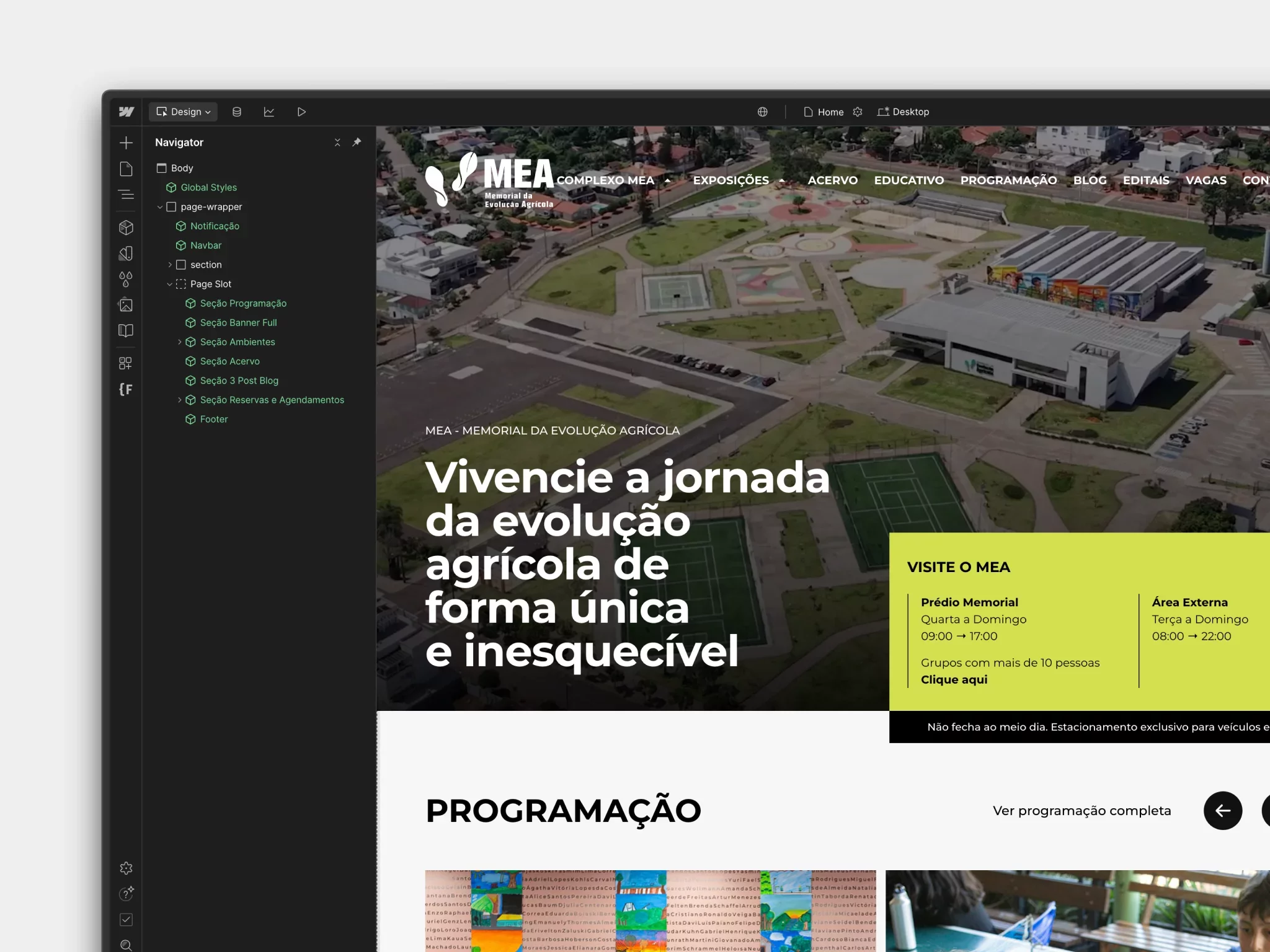 Launch of the new MEA website: a digital milestone for Latin America's largest memorial

Made with No-Code
This blog was developed in no-code: fast, flexible and scalable. Want to see it in practice?
I want to know
 Vamos falar sobre seu projeto?